If there's one inverter maintenance task that gets skipped more than any other, it's checking the battery water level. It takes five minutes and directly affects how long your battery lasts.
Why Water Level Matters
Tubular and flat-plate lead-acid batteries (the type used in most home inverter setups) rely on the electrolyte fluid covering the internal plates. When the water level drops too low, the exposed plates degrade faster, permanently reducing the battery's backup capacity — even if you top it up later, that damage doesn't fully reverse.
How Often to Check
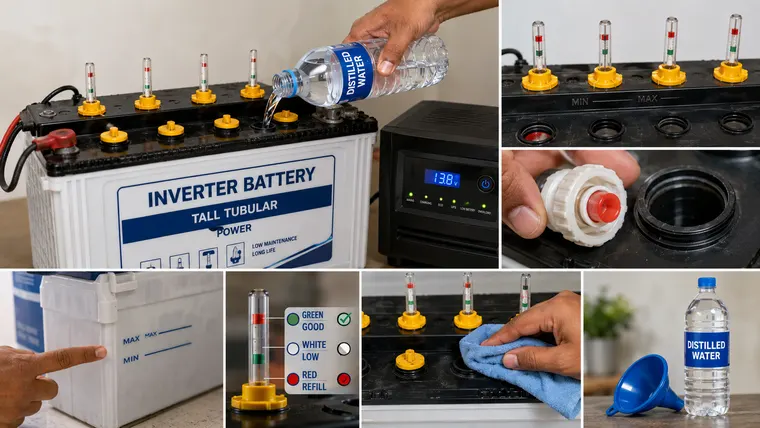
- Check the water level once a month as a habit, more often in peak summer when evaporation is faster
- Top up only with distilled water — never tap or borewell water, which introduces minerals that damage the plates
- Fill to the level marked on the battery casing — overfilling causes overflow during charging and corrodes terminals
Signs You've Been Skipping This
Backup time noticeably shorter than it used to be, a battery that heats up quickly during charging, or a burning smell near the battery are all common signs of a low-water situation that's gone on too long.
What About Maintenance-Free Batteries?
Sealed/maintenance-free batteries don't need water top-ups, but they're not maintenance-free forever — terminal cleaning and periodic charging checks still matter.
This one habit, done monthly, is the single highest-value thing you can do to extend your inverter battery's working life — and it's something we check as standard on every AMC visit.